David Huerta

Selected Works

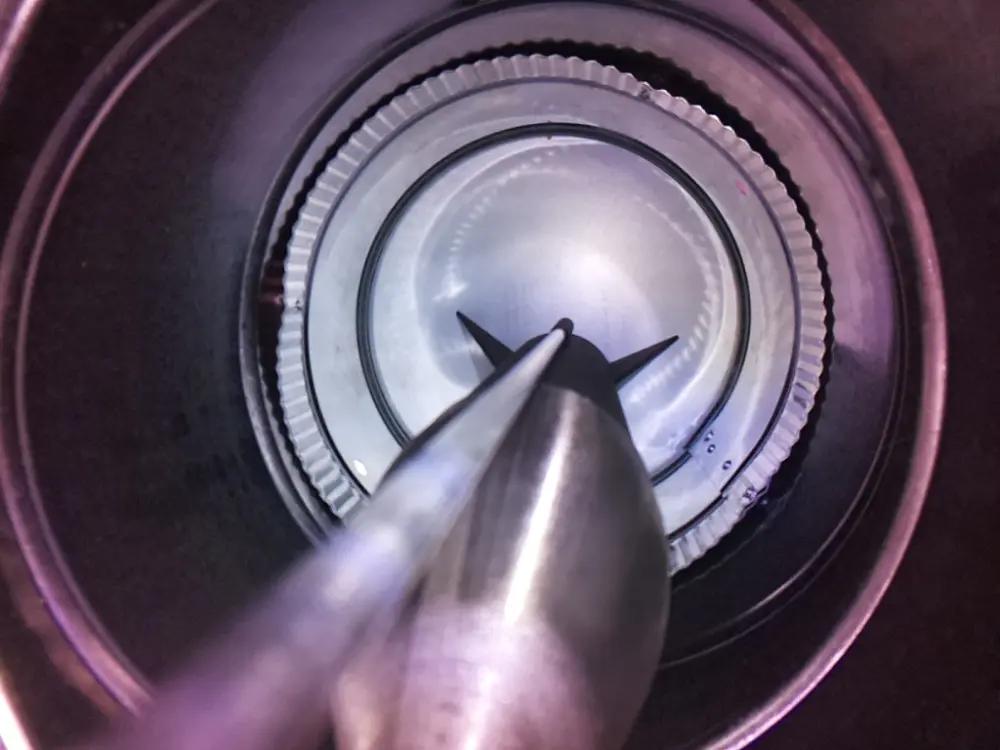
An above-view photo of a 3D-printed model rocket on an Estes Porta-pad E launch pad enclosed in a steel silo made of air vent ducting. The rocket cone is translucent gray, and the rest is matte black.

deauth_ority

2026 Solo work

Deauth_ority was an artistic intervention centering around a proof-of-concept model-rocket-propelled device designed to emit a Wi-Fi deauthentication signal on the network used by the US White House. Although it was never intended to be launched, it existed to serve as a provocation to the state and a speculative example of resisting authoritarian regimes.

Its physical whereabouts were hidden, but viewable through a Tor onion service on the so-called "darknet." This kept its location unknowable to network-level surveillance, and further exposed the illusion of an omniscient surveillance state. The rocket was on view until early 2026 using the Tor Browser (exclusively), inviting participants to enter the anonymous Tor network themselves and consider the possibilities it offers.

This work was made possible with the support of the Error 406: Tech Fascism Not Acceptable open call, which culminated in the online group show 13 Scores Against Tech Fascism.

Code, 3D print files and bill of materials are available on Codeberg
Press

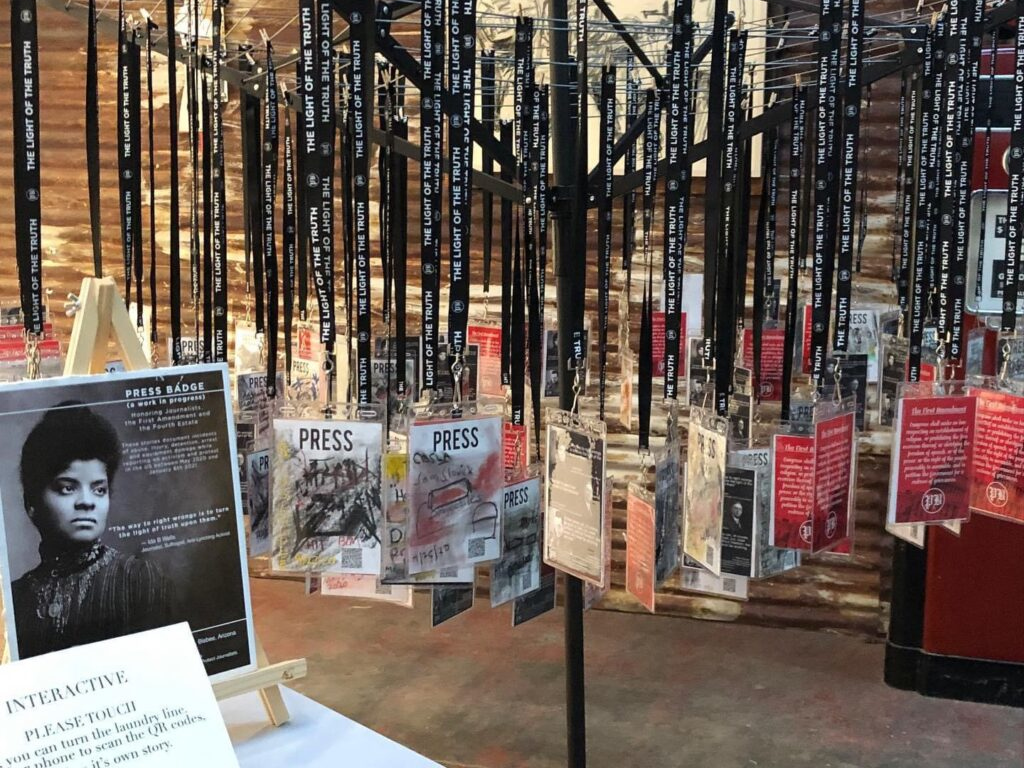
A circular clothes hanger with several lanyards holding informational 'press badges' each featuring a journalist in the U.S. Press Freedom Tracker. A photo of Ida B Wells is on a small table in the foreground.

Press Badge

2021 Technical Collaboration with Laurie McKenna

Using the U.S.Press Freedom Tracker, an online database which tracks abuse against journalists, this project transforms data into a mixed media installation honoring the journalists working in the US in the time frame of May 2020 to January 6, 2021

Source: Rockpaperfence.com

My technical contribution was in introducing the interactive element of the work: A set of QR codes for each badge programmatically generated using the US Press Freedom Tracker dataset, which is freely available in machine-readable data formats.

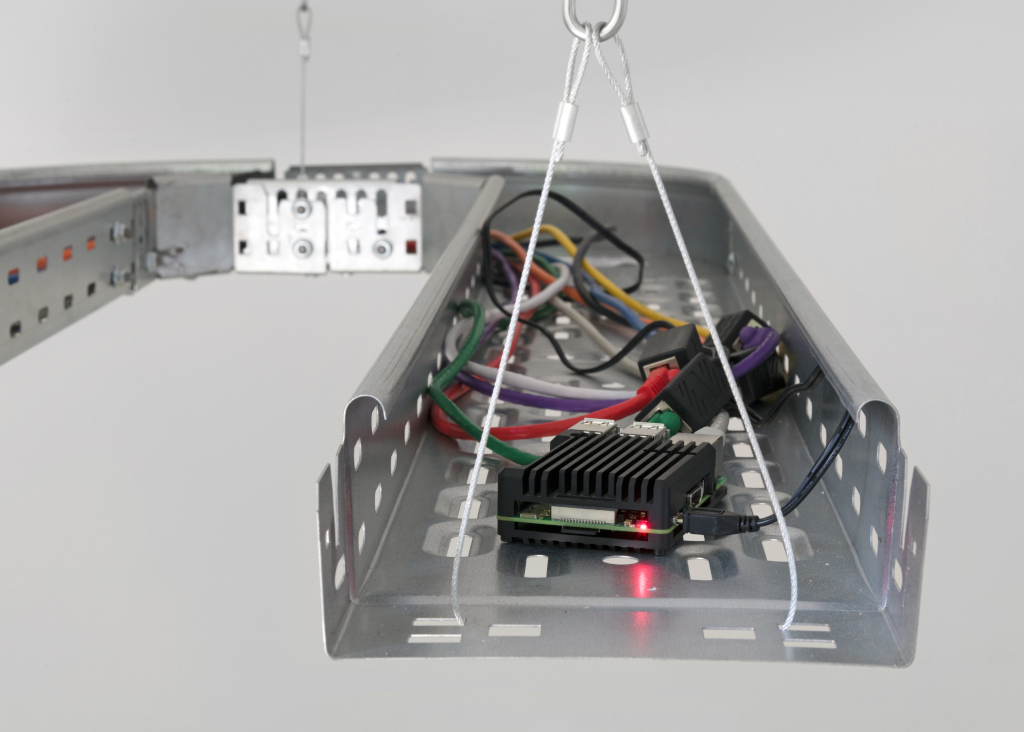
A Raspberry Pi computer in a black metal case with cables coming out the back of it, suspended in an overhead cable raceway similar to those used in data centers.

Personal Photographs

2019 Technical Collaboration with Eva & Franco Mattes

A network of cable trays that winds around and throughout the exhibition site. All the photos we shot in a given day (e.g. July 8 2012, October 8 2007, December 15 2011) are in constant circulation within the cables. Images without viewers, yet always there. Like most images nowadays.

Source: https://0100101110101101.org/

I created the software, pi2pi, used in Personal Photographs installations. It uses bash and rsync to transmit a set of photos between two Raspberry Pi computers, repeatedly as long as an installation is live.

Press

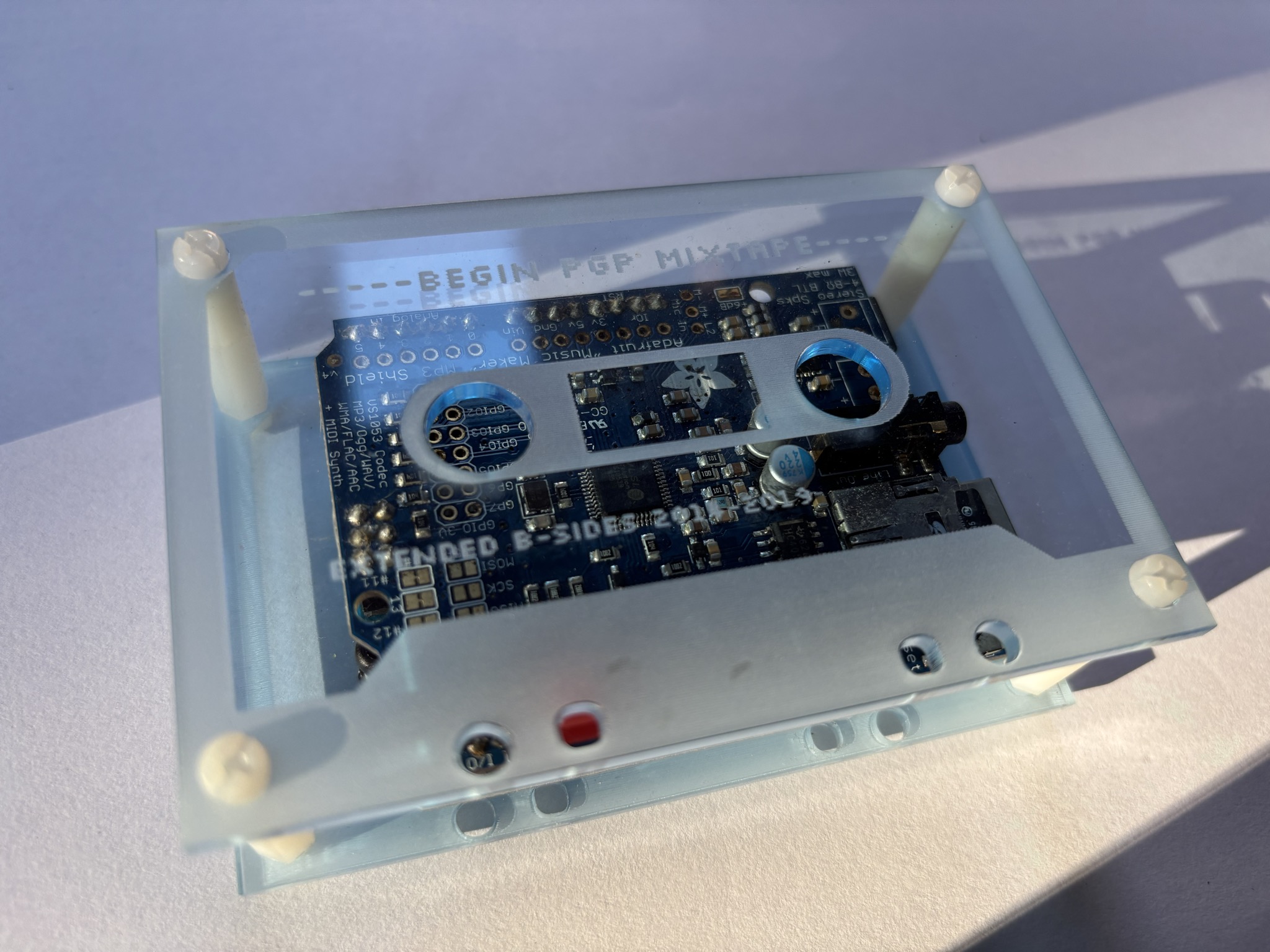
An Arduino microcontroller and music player circuit board in a blue-tinted transparent acrylic enclosure laser-etched to look like a cassette tape.

-----BEGIN PGP MIXTAPE----- Extended B-sides 2014-2019

2019 Solo work

A follow-up to 2014's -----BEGIN PGP MIXTAPE-----, which was a response to state surveillance, Extended B-sides 2014-2019 follows and comments on the rise of surveillance capitalism. More specifically, it narrates the Facebook and Cambridge Analytica scandal, while offering glimpses of a decentralized future beyond Zuckerberg's walled garden.

Unlike the original, which featured an encrypted and unencrypted version, only an unencrypted version was created, in a transparent blue tinted transparent and white enclosure. A red LED illuminates at a point in playback where a Facebook notification sound is heard, announcing the theme of the mixtape.

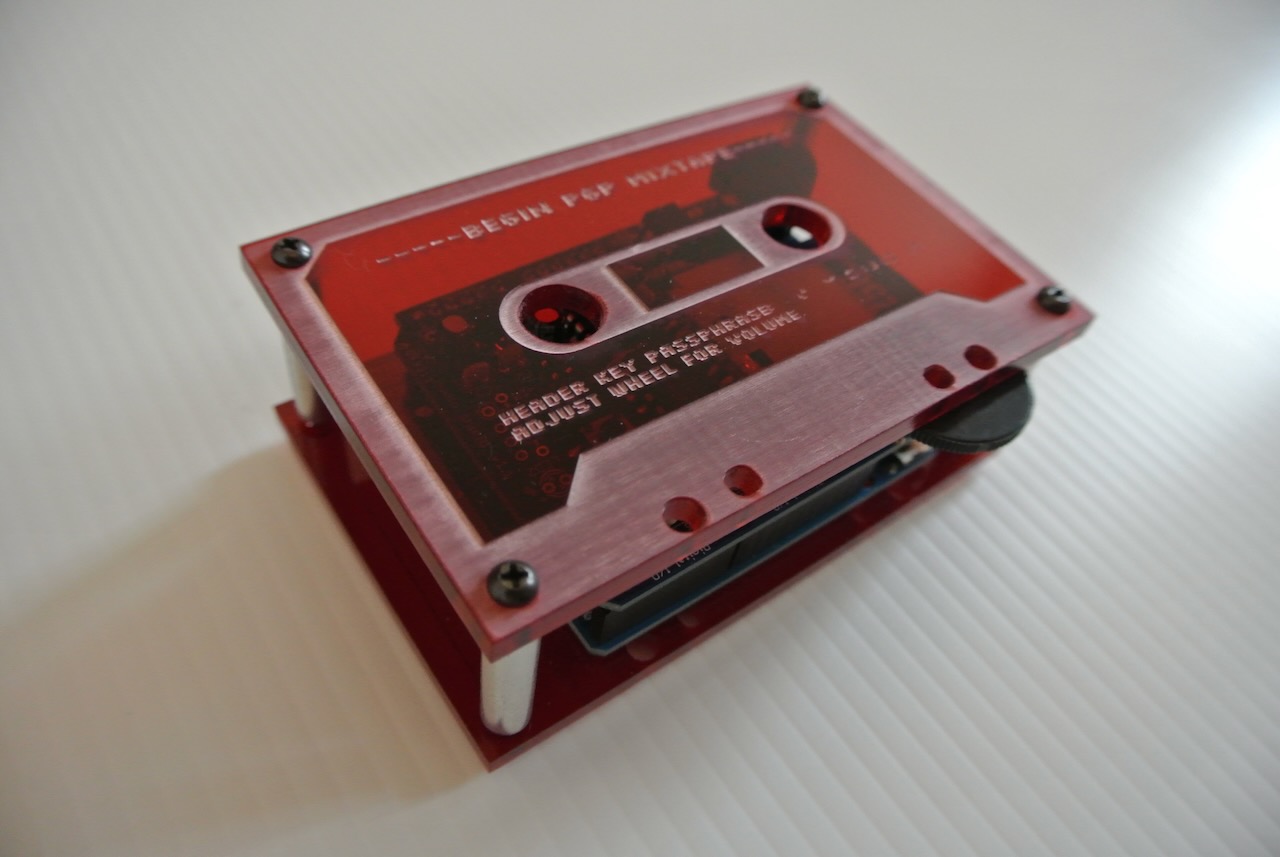
An Arduino microcontroller and music player circuit board in a transparent red transparent acrylic enclosure laser-etched to look like a cassette tape.

-----BEGIN PGP MIXTAPE-----

2014 Solo work

A curated “mixtape” composed and encrypted entirely on an airgapped computer, playable with a bespoke, cassette-shaped device sent to NSA's headquarters in Fort Meade, but without the means to decrypt the mix. This was made for two audiences: 1) Anyone curious enough to open the box and try their hand at decrypting a 2012 TrueCrypt volume in Fort Meade and 2) A jaded general public, after a year of Snowden leak stories, wanting/needing a reminder that it is in fact, possible to resist mass surveillance. This project was widely covered in tech media and, keeping with its reputation for secrecy, Fort Meade has said nothing in response to the project.

In addition to the encrypted version, an unencrypted version was also made, which allowed invited guests to listen to the mix, which narrates the rise of the surveillance state post-9/11, using a mix of music, recorded interviews, and more, with a final coda that hints at a world after mass surveillance.

Press

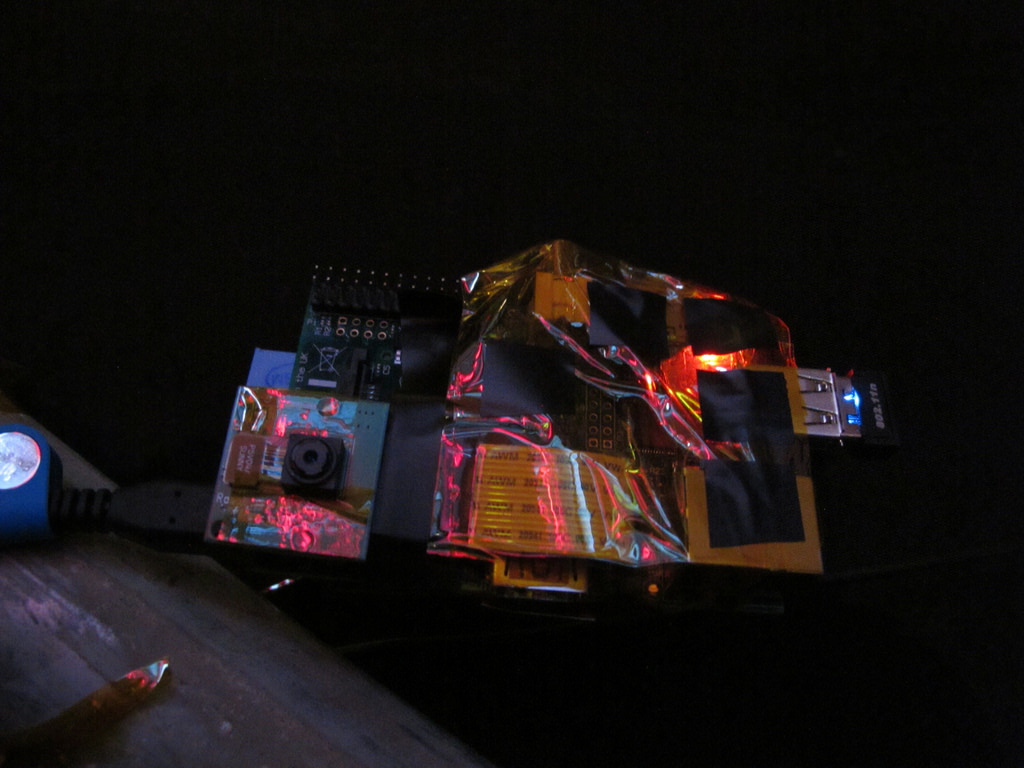
A Raspberry Pi computer and camera with other components wrapped in a cacoon of yellow kapton tape with a 'glider' pattern from Conway's Game of Life made with pieces of electrical tape

life.gif

2014 Collaboration with Rachel Uwa and Art Hack Day: Afterglow participants

A bespoke, portable, raspberry-pi-based "lifecam" built within 48 hours worn around one's neck and created for Art Hack Day: Afterglow in Berlin. It was made as a proof-of-concept answer to the question of sousveillance technology and what it could look like if it was made in a user's own terms and principles, rather than those of Silicon Valley; It's hardware and software is transparent and open source, and unlike the commercial alternatives at the time (Narrative, etc) this device stored images on-device or to a self-hosted server, rather than ceding autonomy over this data to a third party service.

Photos captured were programmatically stitched into an animated gif, and put on display for Art Hack Days's group show as part of the 2014 Transmediale festival.